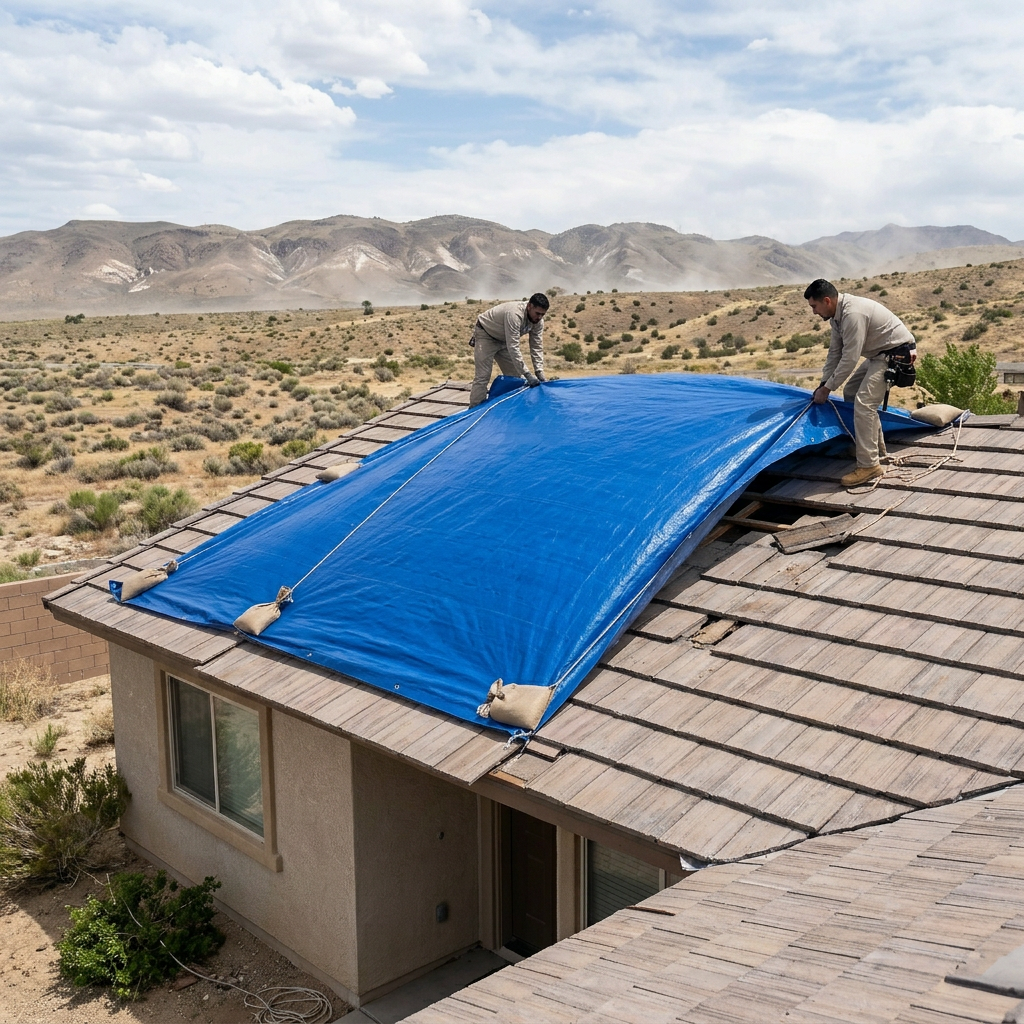
When tarping makes sense
Roof tarping is a temporary dry-in step, not a permanent roof repair. It can help protect the home after wind removes shingles, a limb damages the roof, decking becomes exposed or an active leak appears before the roof can be repaired.
In the Antelope Valley, strong wind can create sudden roof openings. If rain is coming or water is already entering the home, temporary protection may be the most urgent first step.
What emergency tarping protects
A tarp should be placed to move water away from the damaged area, not trap water against the roof. It should also be secured without creating unnecessary new damage.
- Exposed decking after shingles or tiles are displaced.
- Open roof sections from wind, debris impact or fallen branches.
- Temporary protection over active leak areas.
- Documentation before permanent repair or insurance review.
After the tarp is installed
The roof still needs a permanent repair plan. That may involve emergency roof repair, roof leak repair, roof replacement or help documenting damage. The guide on roof damage and insurance documentation can help you know what to photograph.