Storm damage and urgent roof leaks
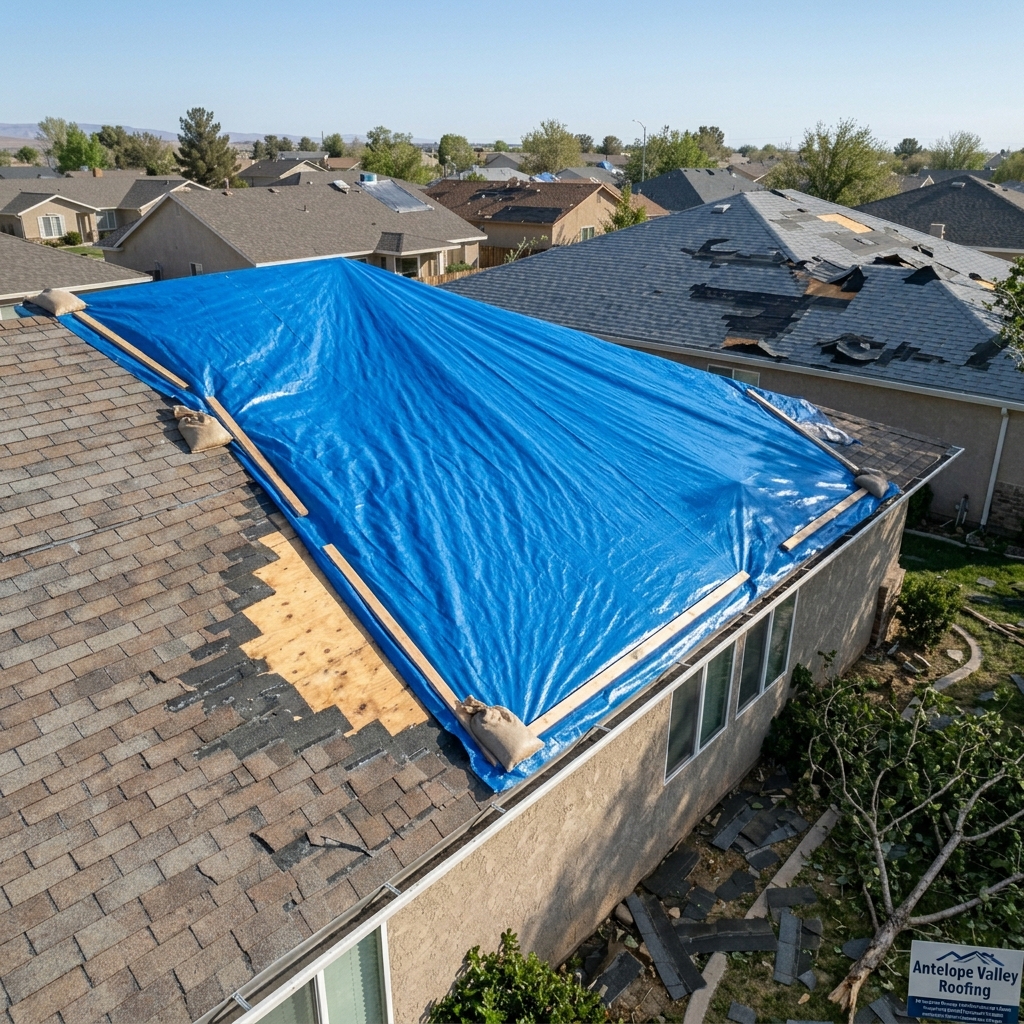
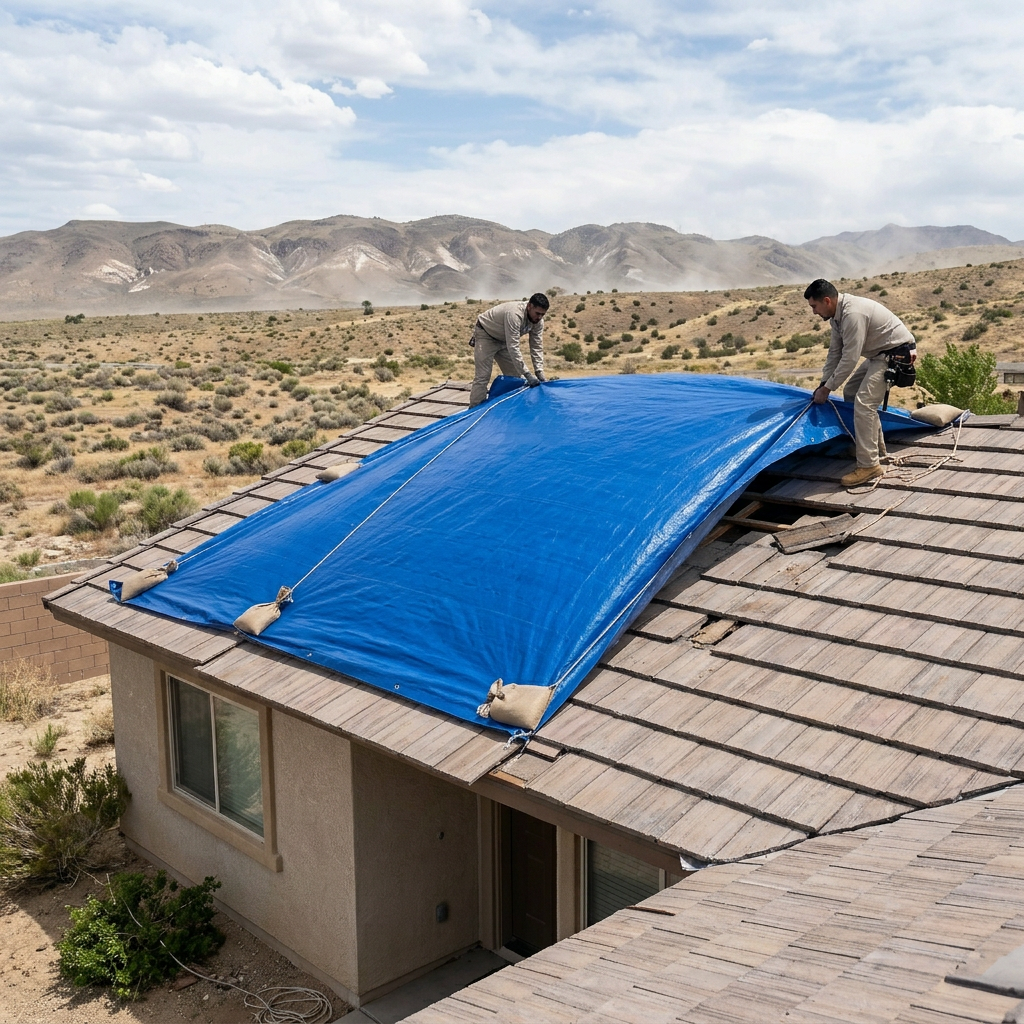
After a wind or rain event, the first priority is limiting additional water damage. Temporary dry-in work, tarping, localized patching or securing lifted materials may be needed before a permanent repair can be completed. Photos of the damage, the time it started and where water appeared inside can help make the inspection more efficient.
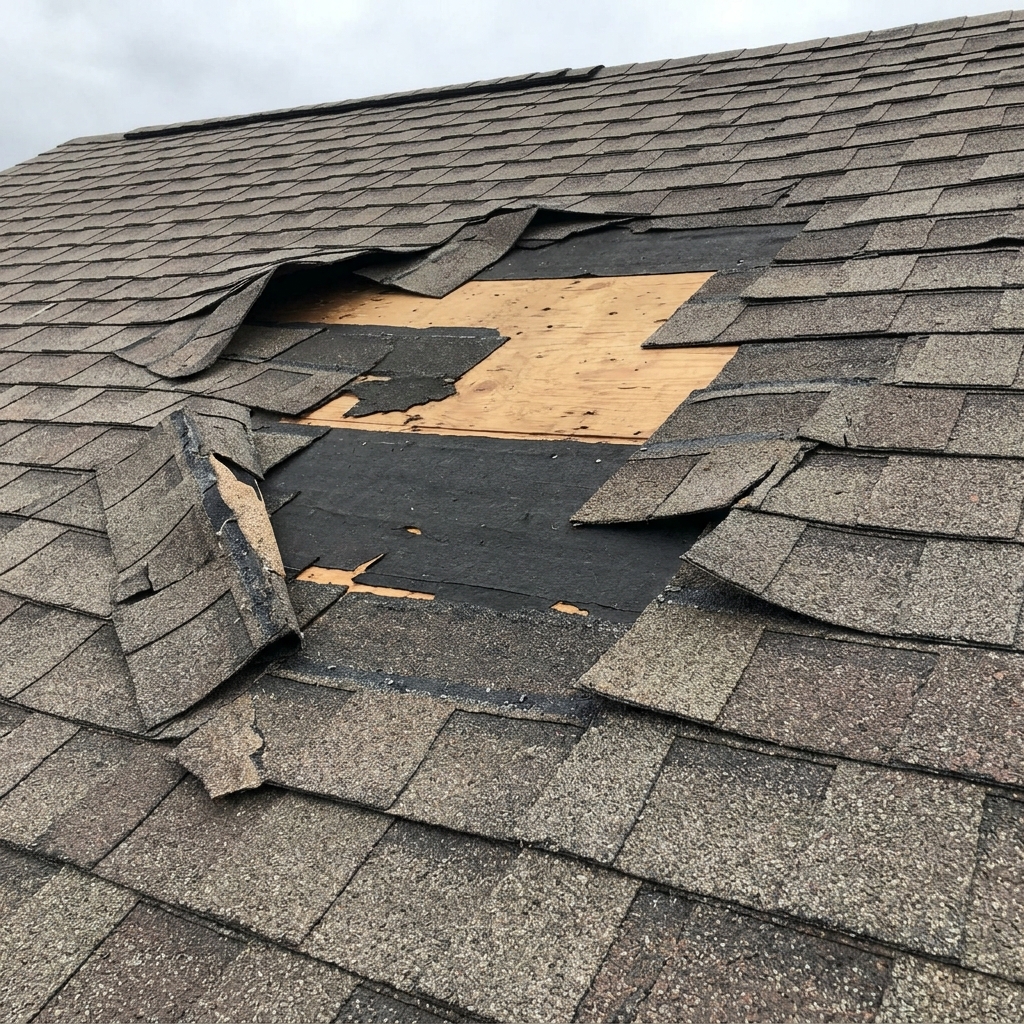
High-desert wind can lift shingle edges, break seals, move tiles, expose fasteners and push debris into vulnerable roof areas. Even if the inside of the house is still dry, visible missing materials or damaged flashing should be checked before the next storm.
- Move valuables away from active drips if water is entering.
- Take photos of interior stains and exterior damage if safe.
- Avoid walking on a wet or damaged roof.
- Request a repair plan that separates temporary protection from permanent repair.
Useful next reads: storm preparation, insurance documentation and after-wind-storm checklist.
Emergency roofing is about stopping the damage from spreading
When water is actively entering the home, the first goal is temporary control. That may mean identifying the likely roof opening, protecting the interior, documenting damage and deciding whether tarping or immediate repair is the right first move.
Emergency roofing does not always mean the final repair happens the same day. Sometimes the safest first step is to dry in the exposed area so water damage does not spread while materials, access and repair scope are planned correctly.
After the immediate leak is controlled, the roof still needs a permanent solution. That may be a small repair, replacement of damaged roofing material, flashing correction, underlayment work or a larger replacement if the storm exposed existing roof age.
Urgent signs
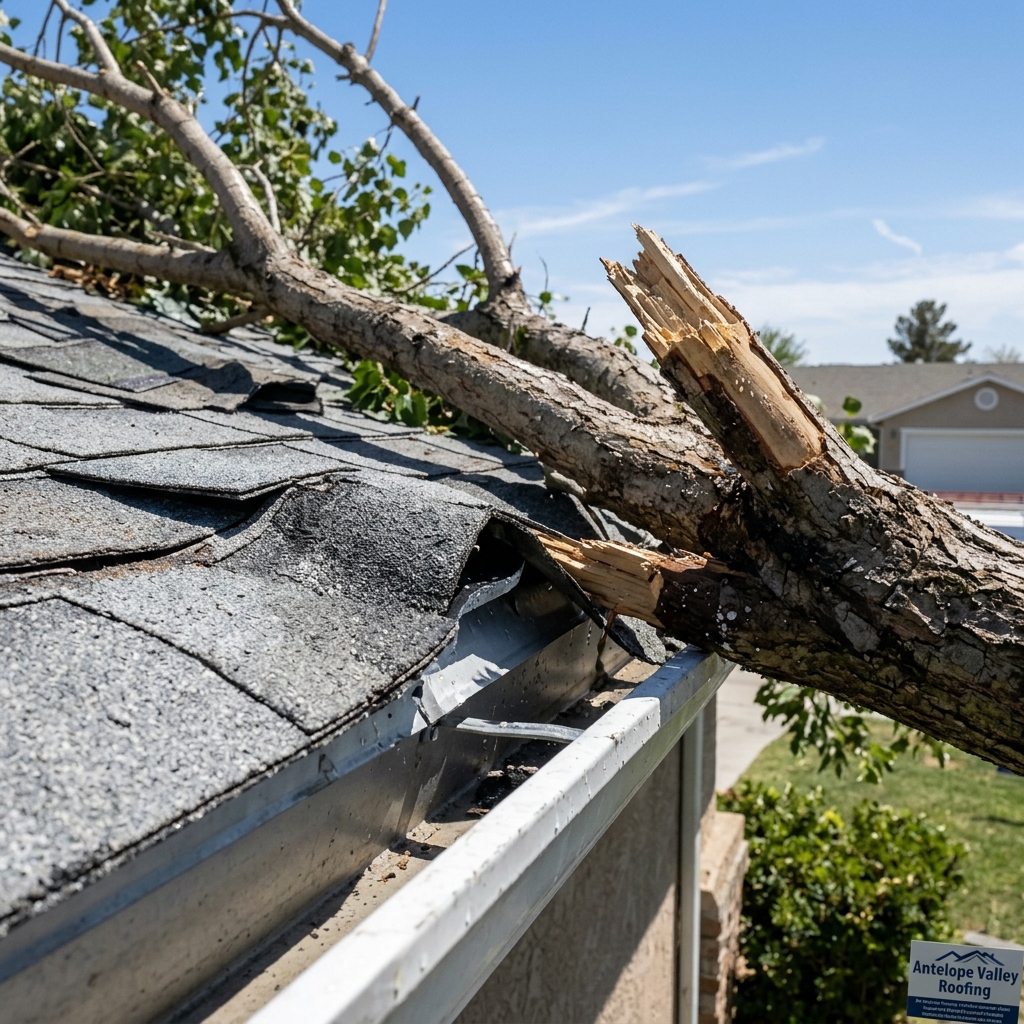
Active dripping, exposed decking, missing roof sections, fallen branch damage or water near electrical fixtures should be handled quickly.
After the emergency
Photograph damage, keep notes about when it happened and schedule a permanent repair plan so the temporary protection does not become the long-term solution.
Helpful next steps:
compare roof repair,
roof replacement,
emergency roof repair,
local service areas and
requesting a roof check.